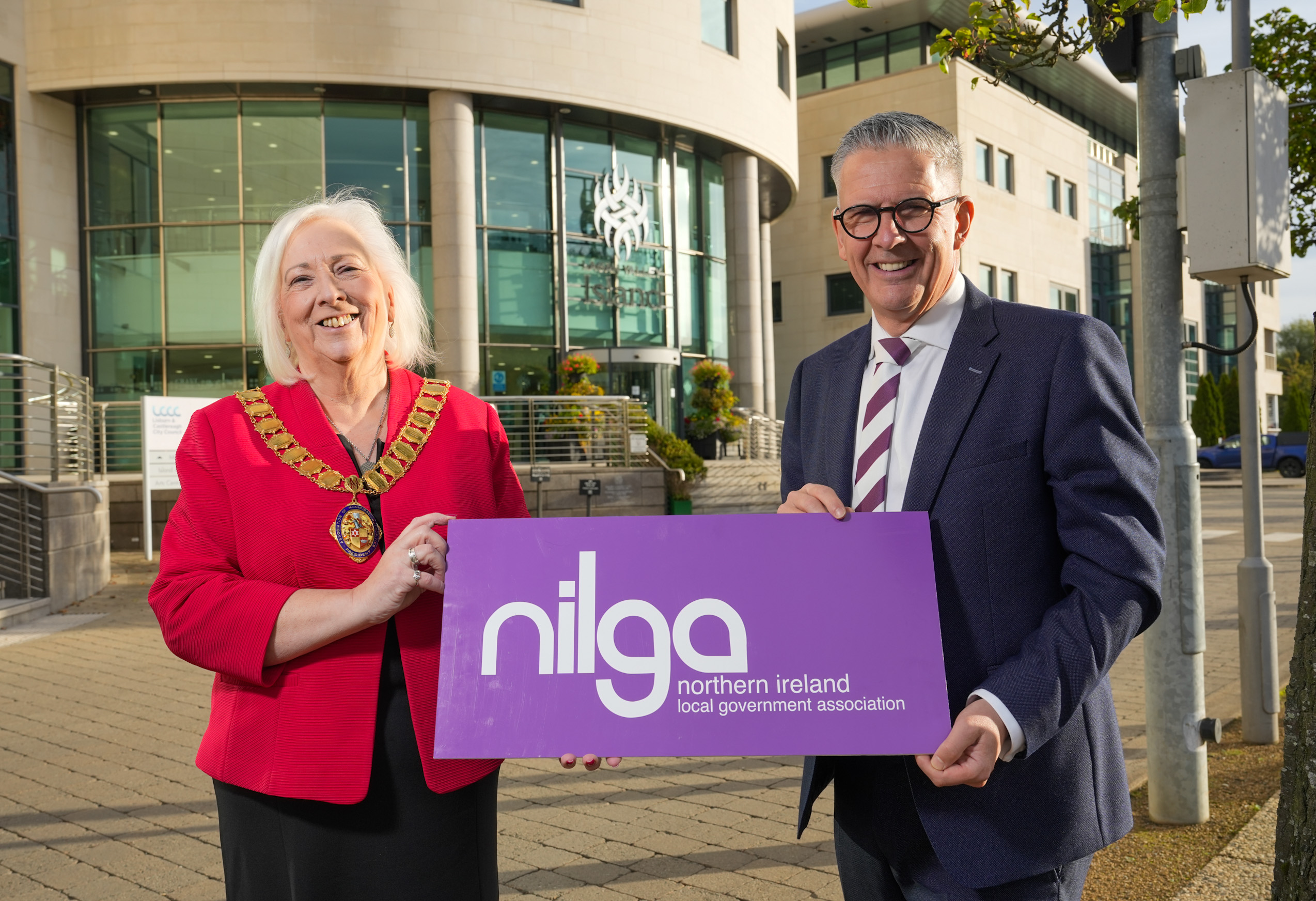
The Northern Ireland Local Government Association (NILGA) brought together elected members, council officers, public-sector leaders and partners at its Local Government Conference and Exhibition in Lagan Valley Island, Lisburn, on Thursday 8 October 2026, to agree practical priorities for stronger local delivery.
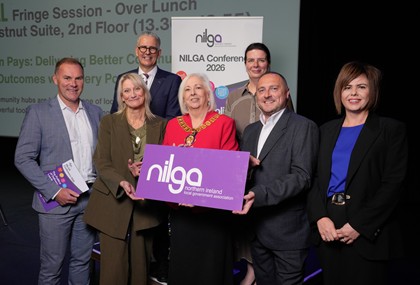
Hosted by Mark Simpson during the week of NILGA’s 25th anniversary, the conference looked ahead to the local government election scheduled for 6 May 2027 and the next council mandate, focusing on the leadership, capacity and partnerships councils need to deliver measurable benefits for communities.
Under the theme The Politics of Delivery: Leading Through Uncertainty, delegates identified how councils can protect essential services, strengthen public trust and make better use of limited resources amid financial pressure, rising expectations and political uncertainty.
The discussions produced a clear set of priorities: earlier council involvement in policy development, a stronger central-local government partnership, greater local flexibility over resources, investment in councillor and officer capacity, and wider use of evidence, innovation and collaboration to improve services.
The programme translated these priorities into practical discussion on courageous, values-led leadership; collaboration across councils, sectors and communities; and innovation that improves transparency, accountability and trust. Sessions included Delivering for Communities in Uncertain Times, a leaders’ debate on courageous leadership, and Innovation and Trust at the Local Level.
A key outcome was the launch of The Future of Local Government in Northern Ireland, independent horizon-scanning research commissioned by NILGA and produced with Pivotal. The report provides evidence to shape sector priorities ahead of the 2027 election and guide the next council mandate.
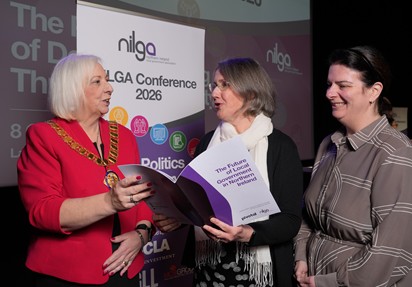
The research finds that local government is a stable, resilient and vital part of Northern Ireland’s public sector. However, its potential is constrained by a highly centralised system in which councils are too often consulted only after policy decisions have been made. The report calls for councils to be involved earlier in policy development, to have greater discretion over existing resources, and for sustained consideration to be given to devolution, financial autonomy and new revenue streams.
It also highlights the need to strengthen councillor capacity, embed evidence-led strategy and sustain long-term reform. These lessons will be particularly important as councils prepare to welcome newly elected and returning members in 2027 and establish priorities for the new mandate.
Speakers and contributors included representatives from the Northern Ireland Executive, local government associations from across the UK and Ireland and senior voices from local government and the wider public sector, reflecting the conference’s emphasis on shared leadership, innovation and delivery.
NILGA President Alderman (Ald) Hazel Legge said:
“Councils understand their communities because they serve them every day. The outcome we need from today is a stronger partnership in which local government is involved earlier, trusted with greater flexibility and equipped to deliver better services and place-based solutions.
“The conference helped the sector identify practical priorities: protecting essential services, investing in leadership and capacity, using evidence and technology responsibly, and collaborating where that delivers better results for communities. We now need to turn those priorities into action.
“With the local government election scheduled for 6 May 2027, this is the time to prepare for a strong start to the next mandate. The Pivotal report gives councils and partners a clear evidence base to support incoming and returning elected members, shape realistic priorities and unlock local government’s greater potential to lead change.”
Delegates also explored practical applications of data, digital tools, artificial intelligence, service redesign and partnership working. The focus was on using these approaches to improve outcomes, efficiency and responsiveness while protecting local values, transparency and public accountability.
The conference concluded with NILGA committing to carry these priorities into its advocacy, councillor development and partnership work ahead of the 2027 election, helping councils prepare for the next mandate and strengthen delivery for communities across Northern Ireland.